Peptides have become one of the most talked-about wellness and performance supplements in recent years. From fitness enthusiasts looking to build lean muscle to individuals seeking anti-aging support, peptides are seen as powerful biological messengers that can trigger specific responses in the body. But as with any health trend, two major questions always come up: Are peptides safe? And if so, what’s the best way to deliver them—through injections or transdermal patches?

 Subscribe and Save – $79.99
Save $10 (Cancel anytime – Click To Learn About Our Subscription Option)
Subscribe and Save – $79.99
Save $10 (Cancel anytime – Click To Learn About Our Subscription Option)
30-Day Supply – $89.99 Add to Cart
Let’s take a closer look at the science, safety, and delivery methods so you can make an informed decision.

Peptides are short chains of amino acids, the same building blocks that make up proteins. Unlike full proteins, peptides are small enough to act as signaling molecules, telling cells how to behave. Different peptides can stimulate the release of growth hormone, accelerate healing, improve skin elasticity, or even support fat loss.
Naturally occurring peptides already exist in your body, but supplementation can boost levels in targeted ways. Because peptides are highly specific, they usually produce fewer side effects than broader hormone therapies—making them attractive in both medical and wellness settings.
Are Peptides Safe?
For most healthy adults, peptides are generally safe when used under medical supervision or with properly formulated products. Clinical research has shown that specific peptides such as BPC-157, CJC-1295, and collagen peptides can be well tolerated and effective.
However, safety depends on three key factors:
- Source Quality – Pharmaceutical-grade peptides are typically safe. Poorly manufactured or contaminated products, however, can pose risks.
- Dosage – Like any bioactive substance, too much can cause unwanted effects such as water retention, joint pain, or metabolic disruption.
- Delivery Method – How peptides are absorbed affects not only effectiveness but also safety. This brings us to the debate between injections and transdermal patches.
Injections: The Traditional Method
Injections are currently the most common way to administer peptides. Because peptides are chains of amino acids, they cannot usually survive digestion—they would be broken down before reaching the bloodstream. This is why oral capsules are often ineffective.With injections, peptides are delivered directly into the bloodstream or subcutaneous tissue, bypassing the digestive system. This ensures high bioavailability, meaning the body can use almost all of the peptide dose provided.
Pros of Injections:

- Maximum absorption and potency
- Immediate availability in the bloodstream
- Proven track record in medical use
Cons of Injections:
- Pain or discomfort from needles
- Very Expensive
- Risk of infection or irritation at the injection site
- Inconvenience for long-term, daily use
Transdermal Skin Patches: A Modern Alternative
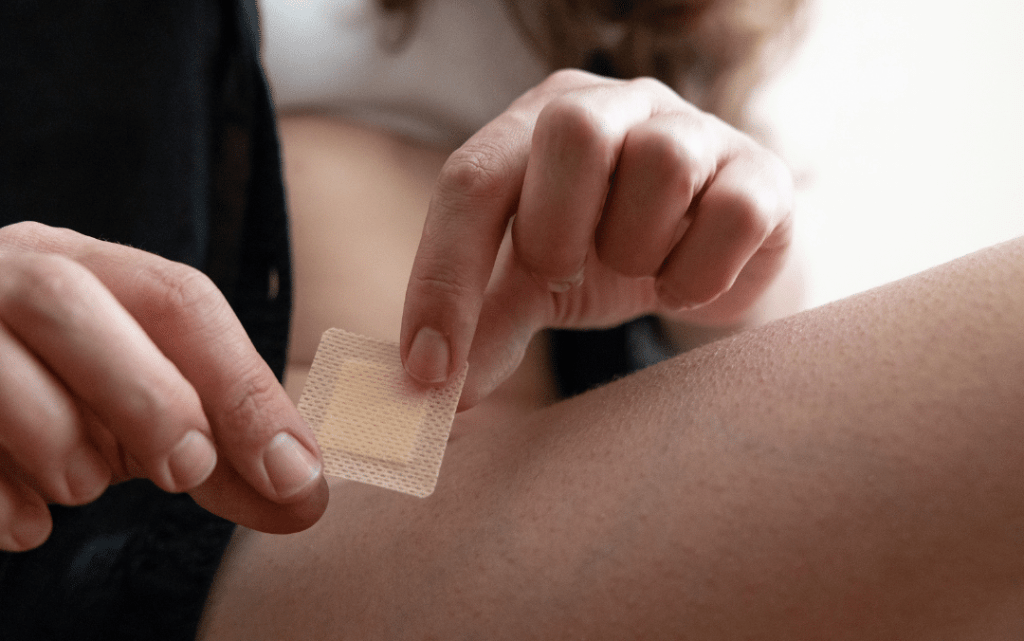
Transdermal patches are gaining attention as a needle-free delivery system. These skin-applied patches use advanced technology to transport peptides through the dermal layers and into the bloodstream over time.
How it works: The patch contains peptides in a carrier solution that penetrates the skin barrier gradually, creating a time-release effect. This avoids spikes and crashes in peptide levels and may reduce side effects compared to injections.
Pros of Transdermal Patches:
- Painless and needle-free
- Lower Cost
- Convenient, discreet, and easy to apply
- Provides slow, steady absorption
- Reduces risk of injection-site infections
Cons of Transdermal Patches:
- Bioavailability may be slightly lower than injections
- Effectiveness depends on skin permeability
- Not all peptides are suitable for transdermal delivery
 Subscribe and Save – $79.99
Save $10 (Cancel anytime – Click To Learn About Our Subscription Option)
Subscribe and Save – $79.99
Save $10 (Cancel anytime – Click To Learn About Our Subscription Option)
30-Day Supply – $89.99 Add to Cart
The Bottom Line
Peptides are generally safe when sourced from reputable suppliers and used responsibly. Injections offer slightly more absorption but can be uncomfortable and inconvenient. Transdermal patches, on the other hand, provide a promising delivery system that is user-friendly, discreet, and steady in release.
For most wellness-focused individuals, transdermal patches may be the ideal middle ground—offering convenience and effectiveness without the need for daily injections. If considering peptide therapy, always consult a healthcare professional to determine which delivery method is right for your needs.