
Showing all 3 results
(On Mobile, Tap To Scroll)
Get In Touch With Us
We are a very easy company to communicate with, and we welcome any and all questions. You will always speak to an informed person who is not involved in sales in any way.
Here are three ways to reach us.
(On Mobile, Tap To Scroll)
Shopping Cart Security
Our website and shopping cart functions contain advanced technology that is constantly updated to ensure that your personal and payment information is kept confidential and secure!
When you provide us with any personal information including your name, address, e-mail, and credit card number, it is processed over a secure connection on secure servers. We use Secure Socket Layers (SSL) to encrypt all information you provide before sending it to our servers.
About SSL Encryption – SSL is the industry standard and the best software available for secure e-commerce transactions. Every SSL Certificate is created for a particular server in a specific domain for a verified business entity. Like a passport or a driver’s license, an SSL certificate is issued by a trusted authority, the Certificate Authority (CA). When the SSL handshake occurs, the browser requires authentication from the server. A customer sees the organization name when they click certain SSL trust marks. SSL Encryption consists of a public key and a private key. The public key is used to encrypt information and the private key is used to decipher it. When a Web browser points to a secured domain, a Secure Sockets Layer handshake authenticates the server (Website) and the client (Web browser). An encryption method is established with a unique session key. They can begin a secure session that guarantees message privacy and message integrity. Authentication Practices – Every SSL Certificate is created for a particular server in a specific domain for a verified business entity. Like a passport or a driver’s license, an SSL Certificate is issued by a trusted authority, the Certificate Authority (CA). When the SSL handshake occurs, the browser requires authentication from the server. A customer sees the organization name when they click certain SSL trust marks (such as the VeriSign Secured™ Seal) or use a browser that supports Extended Validation. If the information does not match or the certificate has expired, the browser displays an error message or warning.
(On Mobile, Tap To Scroll)
Privacy Policy
Privacy Policy: We are committed to complete permission-based marketing while safeguarding your privacy online! By completing our email signup form you grant Phase4 Pharmaceutical, LLC the right to use the collected information for our own marketing purposes only, including e-mails from us to announce new products and, or product promotions. We will not share any of your personal information with 3rd parties!
Unpermitted Use: Individuals under 18 years of age are not allowed to participate in any service or promotions offered on or through our website. No information should be submitted or posted on our Max-Supplements.com website by visitors under 18 years of age.
Acceptance of Policy: By accessing Max-Supplements.com and/or submitting orders and any other information to us, you agree to this policy. We reserve the right, at our discretion, to change, modify, add, or remove portions of this Policy at any time. All Policy changes will take effect immediately upon their posting on the Website. Your continued use of the Website or acceptance of our emails following the posting of changes to this Policy will mean that you accept these changes. If you do not agree to the terms of this Policy, please do not submit any personal information on this or any Company Websites.
(On Mobile, Tap To Scroll)
(On Mobile, Tap To Scroll)
Probiotic Strains In Our 50 Billion Gummy Formulation:
(On Mobile, Tap To Scroll)
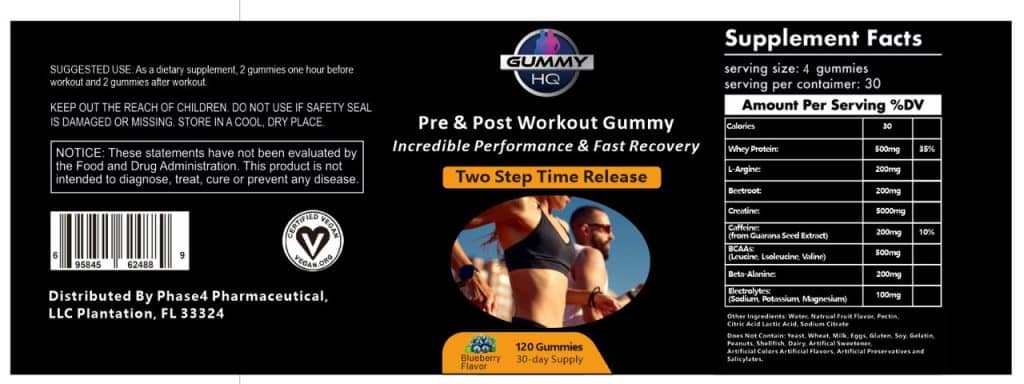
Step 1 occurs when the gummy is chewed. Our controlled time-release allows some of the formula nutrient dosage to be absorbed through the thin oral mucous membranes under the tongue for rapid delivery to the bloodstream.
Step 2 occurs when the balance of the formula nutrient dosage moves through the digestive tract and on into the bloodstream.
Healthy Natural Ingredients
(On Mobile, Tap To Scroll)
About Subscription Orders
Subscription - Our Lowest Price Order Option: When you place an order with the Subscription option we’ll send your recurring order every 30 days.
Cancellation: You are never obligated with Subscription Orders! If you elect to cancel or place your order on hold or to change your next recurring order date, just send us an Email with your instructions. Be sure to do so before the next recurring order mail date.
Questions? Please give us a call at (954) 415-3605 (8:00 AM to 6:00 PM EST) or Email us if you have any questions.
(On Mobile, Tap To Scroll)
(On Mobile, Tap To Scroll)
(On Mobile, Tap To Scroll)
Probiotic Strains In Our 50 Billion Gummy Formulation:


