If you’ve spent any time around a gym, you’ve heard of creatine. It’s one of the most widely studied sports supplements in the world, and for good reason. Decades of research support its role in strength, power and training performance. Here’s what creatine is, what it does, and why more people are trading the scoop and shaker bottle for a gummy.
What Is Creatine?
Creatine is a compound your body makes naturally from three amino acids: arginine, glycine and methionine. About 95% of it is stored in your muscles, where it helps produce energy. You also get small amounts from red meat and fish, but a typical diet supplies only one to two grams a day, and people who eat little or no meat often get even less. Supplementing helps fill your muscles’ creatine stores beyond what diet alone provides.
 Subscribe and Save – $29.99
Save $10 (Cancel anytime – Click To Learn About Our Subscription Option)
30-Day Supply – $39.99 Add to Cart
How Creatine Works
During short, intense bursts of activity, like lifting a heavy weight or sprinting, your muscles burn through their quickest energy source, ATP, in seconds. Creatine, stored in muscle as phosphocreatine, helps rebuild ATP rapidly, so your muscles can keep working hard a little longer. A few extra reps, set after set and week after week, add up.
The Fitness Benefits

- Strength and power: Supports greater strength and power output when combined with resistance training.
- Lean muscle: Helps support gains in lean muscle mass over a consistent training program.
- Training performance: Supports performance during repeated high-intensity efforts, such as interval training and team sports.
- Recovery: Research suggests creatine may support recovery between hard training sessions.
Benefits Beyond the Gym
Researchers are also studying creatine’s role in healthy aging and brain health. Your brain uses creatine for energy too, and early research suggests supplementation may support cognitive performance, especially during mental fatigue or short sleep. For older adults, creatine paired with strength training may help support muscle strength as we age.
How Much Should You Take?
Most research uses 3 to 5 grams of creatine per day. Some people start with a higher-dose “loading phase” for about a week, but it isn’t required. Taken daily, creatine gradually fills your muscle stores over three to four weeks. The most important factor is simple: take it every day. Creatine works by building up in your muscles, so consistency matters more than timing.
Powder vs. Gummies

Creatine monohydrate powder has been the standard for years, and it’s a good, cost-effective way to take creatine. But powder has its drawbacks. It has to be measured and mixed, it can taste gritty, it doesn’t always dissolve completely, and a shaker bottle isn’t always convenient at work or on the road.
Gummies solve those problems. Each serving is pre-measured, so there’s no scooping or guessing. They’re portable, they taste good, and taking them takes seconds. That makes gummies an easy, efficient way to get your daily creatine, and because creatine works through daily consistency, a format you actually enjoy can make a real difference. Your body absorbs creatine monohydrate well from either form, so the best choice is the one you’ll stick with.
When choosing a creatine gummy, look for a brand that clearly lists the amount of creatine per serving on the label, so you know you’re getting a meaningful dose.
Try Maximize HQ Creatine Monohydrate Gummies
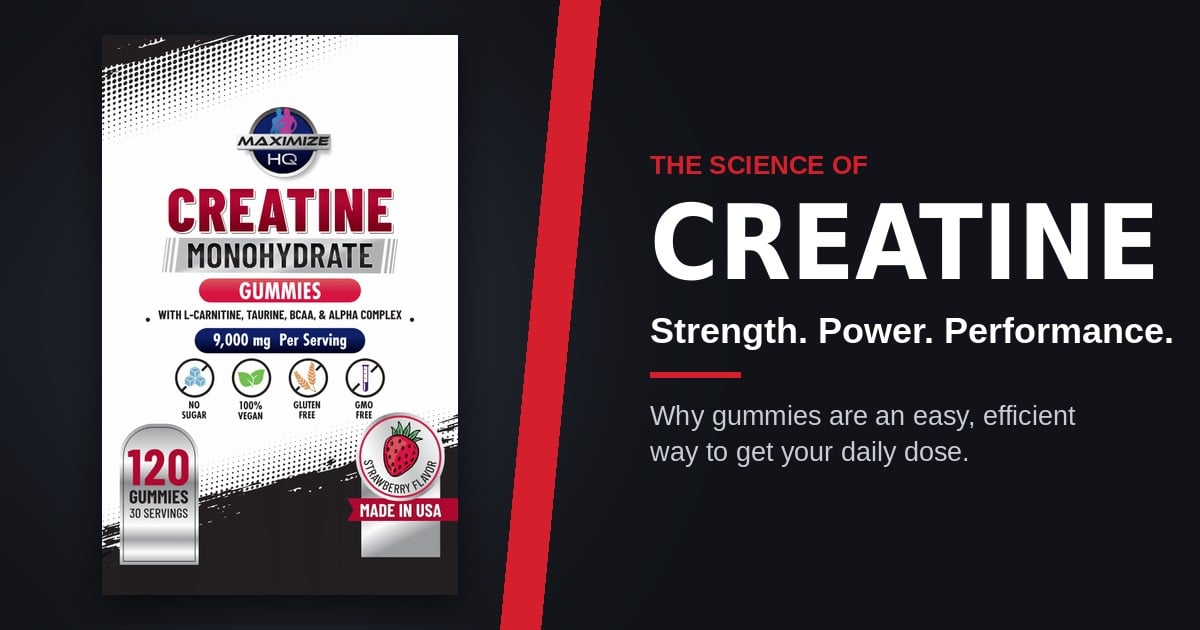
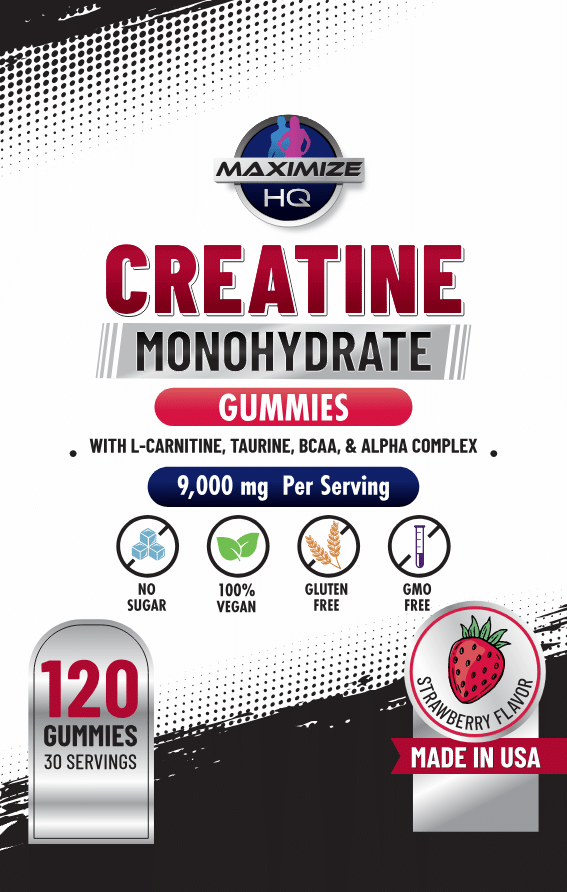
Our Creatine Monohydrate Gummies pair creatine with L-carnitine, taurine, BCAAs and our alpha complex in a strawberry-flavored gummy that’s sugar-free, 100% vegan, gluten-free, GMO-free and made in the USA. Each resealable pack holds 120 gummies, a 30-day supply. Order your Creatine Gummies here.
A Note on Safety
Creatine is one of the most researched supplements available and is generally considered safe for healthy adults at recommended amounts. Some people notice a small increase in body weight from water stored in the muscles. If you have a medical condition, are pregnant or nursing, or take any medication, talk with your healthcare provider before starting any supplement.
*These statements have not been evaluated by the Food and Drug Administration. This product is not intended to diagnose, treat, cure, or prevent any disease.