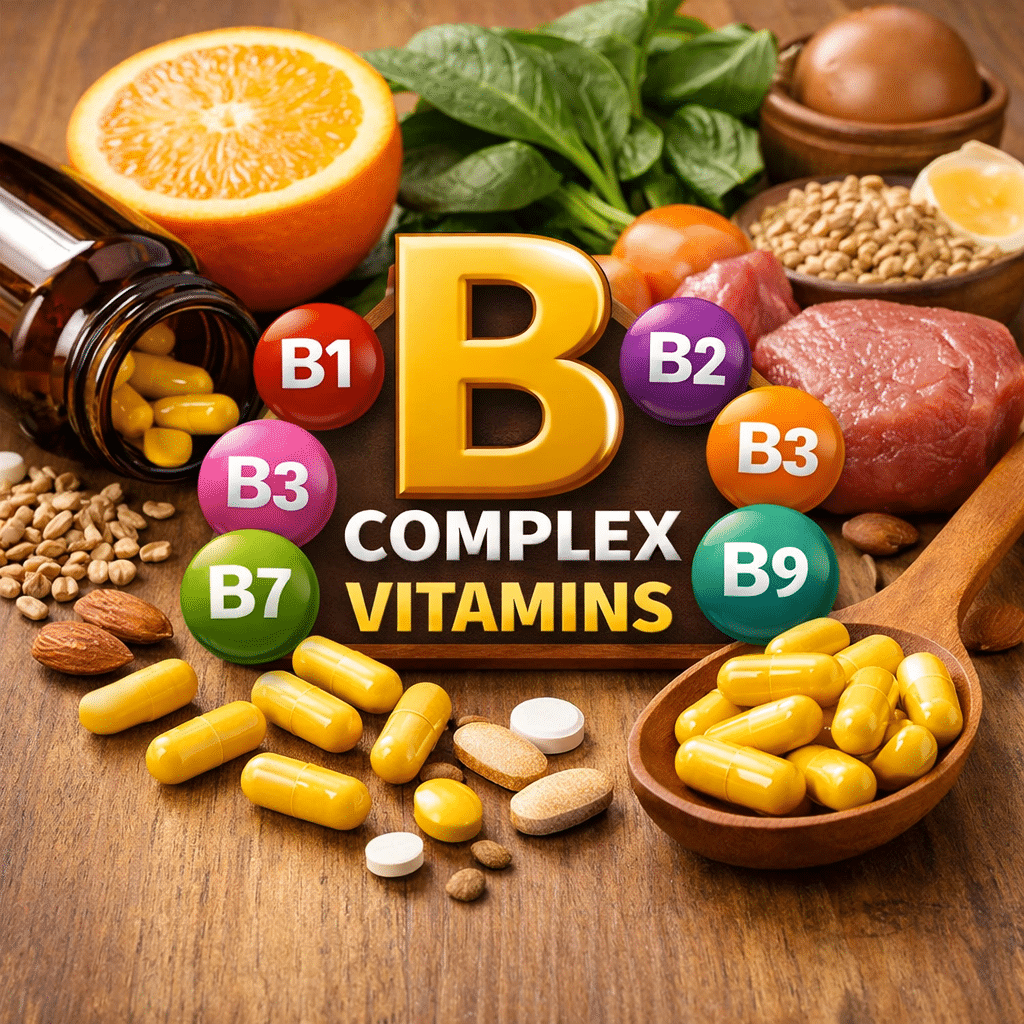
B vitamins are among the most important micronutrients for human health, yet they are also some of the most misunderstood and poorly absorbed nutrients in modern supplementation. The B-vitamin family—including B1 (thiamine), B2 (riboflavin), B3 (niacin), B5 (pantothenic acid), B6 (pyridoxine), B7 (biotin), B9 (folate), and B12 (cobalamin)—plays a central role in energy production, brain and nerve function, red blood cell formation, cardiovascular health, and metabolic balance.
Despite their importance, many people remain deficient or sub-optimal in one or more B vitamins, even when taking oral supplements. The reason often comes down to how B vitamins are delivered to the body.

 Subscribe and Save – $49.99
Save $10 (Cancel anytime – Click To Learn About Our Subscription Option)
Subscribe and Save – $49.99
Save $10 (Cancel anytime – Click To Learn About Our Subscription Option)
30-Day Supply – $59.99 Add to Cart
The critical role of B vitamins in the body
B vitamins are essential cofactors in hundreds of enzymatic reactions. They help convert carbohydrates, fats, and proteins into usable cellular energy (ATP). Without adequate B vitamins, the body struggles to efficiently produce energy, which can lead to fatigue, weakness, poor concentration, and mood changes.
They are also vital for neurological health. B6, B9, and B12 support neurotransmitter synthesis and nerve signaling, while folate and B12 are crucial for DNA synthesis and red blood cell production. Long-term deficiencies have been associated with anemia, nerve damage, cognitive decline, and elevated homocysteine levels, a marker linked to cardiovascular risk.
Unlike fat-soluble vitamins, most B vitamins are water-soluble, meaning the body does not store large reserves. This makes consistent and effective absorption especially important.
Why oral B-vitamin supplements often fall short
Most people assume that swallowing a pill or capsule guarantees nutrient absorption. In reality, the digestive system can be a hostile environment for delicate micronutrients—especially B vitamins.
1. Stomach acid degradation

The stomach’s highly acidic environment is designed to break down food and kill pathogens. Unfortunately, this same acidity can degrade or denature certain B vitamins, reducing their potency before they ever reach the small intestine where absorption occurs.
2. Poor absorption in the gut
Several B vitamins—most notably B12—require specific transport mechanisms for absorption. B12 depends on intrinsic factor, a protein produced in the stomach. As people age, intrinsic factor production often declines, making B12 absorption increasingly inefficient even when intake is adequate.
Other factors that impair absorption include:
- Low stomach acid (common with aging or acid-reducing medications)
- Digestive disorders
- Gut inflammation
- Competition with other nutrients for absorption sites
3. First-pass metabolism
Orally consumed supplements must pass through the liver before entering systemic circulation. This “first-pass effect” can significantly reduce the amount of active vitamin that ultimately reaches target tissues.
The result? A large portion of orally taken B vitamins may never be fully utilized by the body.
Transdermal delivery: bypassing the digestive bottleneck

Transdermal patch delivery offers a fundamentally different approach. Instead of relying on digestion, B vitamins are absorbed directly through the skin and into the bloodstream, bypassing the stomach, intestines, and liver’s first-pass metabolism. This delivery method provides several key advantages.
1. Avoids stomach acid degradation
Because the nutrients never enter the gastrointestinal tract, they are not exposed to harsh stomach acid or digestive enzymes. This helps preserve the integrity and potency of sensitive B vitamins.
2. Improved bioavailability
Transdermal delivery allows nutrients to enter systemic circulation more directly. This can lead to more consistent blood levels compared to oral dosing, where absorption can fluctuate dramatically from day to day.
3. Time-release, steady delivery

High-quality transdermal patches are designed for controlled, time-release delivery, often over 8–24 hours. This mimics the body’s natural preference for steady nutrient availability rather than sharp spikes followed by rapid excretion (a common issue with oral B-complex supplements).
4. Gentle on the digestive system
For individuals with sensitive stomachs, acid reflux, or digestive conditions, transdermal patches eliminate gastrointestinal irritation entirely.
Who may benefit most from transdermal B-vitamin patches?
While anyone can benefit from efficient nutrient delivery, certain populations may find transdermal B-vitamin supplementation especially helpful:
- Adults over 50 with reduced stomach acid or intrinsic factor
- Individuals taking acid-suppressing medications
- People with digestive or absorption issues
- Those seeking sustained energy without crashes
- Individuals who struggle with pill fatigue or compliance
Athletes, busy professionals, and older adults often appreciate the convenience of a once-daily patch that works continuously in the background.
Subscribe and Save – $49.99
Save $10 (Cancel anytime – Click To Learn About Our Subscription Option)
30-Day Supply – $59.99 Add to Cart
A smarter way to support energy, brain, and metabolic health
B vitamins are not optional nutrients—they are foundational to nearly every system in the body. Yet the traditional pill-and-capsule approach often fails to deliver them efficiently due to digestive degradation and poor absorption.
Time-release transdermal patch delivery represents a modern solution to an old problem. By bypassing the digestive system and providing steady, controlled nutrient delivery, transdermal B-vitamin patches can help ensure that the body actually receives the vitamins it depends on to function at its best.
As interest grows in smarter, more bioavailable supplementation, transdermal delivery is quickly emerging as a powerful option for supporting long-term energy, cognitive function, and overall wellness—right through the skin.