B vitamins play a role in nearly everything your body does – energy production, nerve function, red blood cell formation, and metabolism, to name a few. But not all B vitamins are created equal when it comes to how well your body actually absorbs them. If you’ve ever taken a B-complex tablet and wondered why you didn’t feel much different, absorption may be the culprit. That’s where injections and transdermal patches come in, offering two alternatives to standard oral supplements.
The Problem With Oral B Vitamins
Oral supplements have to survive stomach acid, get processed by the liver, and pass through the digestive tract before they reach your bloodstream. This is known as “first-pass metabolism,” and it can significantly reduce how much of a vitamin actually makes it into circulation. Some B vitamins, like B12, are especially vulnerable to this – a large percentage of an oral dose may never be absorbed, particularly in people with digestive issues, low stomach acid, or certain genetic factors that affect nutrient uptake.
Injections: Direct and Fast
B vitamin injections, most commonly B12, though B-complex blends are also available, bypass the digestive system entirely. By delivering the vitamin directly into the muscle or bloodstream, injections allow for near-complete absorption, which is why they’re often recommended for people with diagnosed deficiencies or absorption disorders. Injections also tend to produce a fast, noticeable effect for some people, sometimes within hours.
The trade-offs are practical ones. Injections require either a visit to a clinic or comfort with self-administering a shot, along with proper needle disposal. They can also cause temporary soreness at the injection site, and because dosing happens all at once, blood levels can spike and then taper rather than staying steady over time.
Transdermal Patches: Steady and Convenient
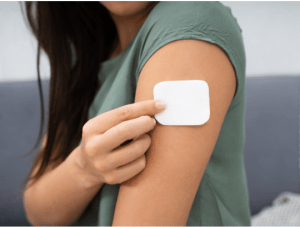
Transdermal patches take a different approach. Worn on the skin, they release B vitamins gradually over several hours, allowing the vitamins to absorb directly into the bloodstream through the skin’s layers, again bypassing the digestive tract’s first-pass metabolism. Because absorption happens slowly and continuously, patches can help maintain more stable nutrient levels throughout the day, rather than the peak-and-decline pattern seen with injections or oral doses.
Patches also win out on convenience. There’s no needle, no clinic visit, and no swallowing pills; you simply apply the patch and go about your day. For people who are needle-averse or want a lower-maintenance routine, this is often the deciding factor.
The tradeoff is variability. Skin absorption can be influenced by factors like skin thickness, hydration, temperature, and placement, meaning results may be less consistent from person to person compared to an injection delivered directly into tissue.
So Which Is Better?

There isn’t a single universal answer. It depends on your goals, lifestyle, and how your body handles each method. Injections may make sense for someone who wants a fast, high-dose intervention, particularly if a deficiency has been identified. Patches may be the better fit for someone looking for a steady, low-hassle way to support daily B vitamin intake without needles or appointments.
What both methods share is a key advantage over standard oral supplements: they avoid the digestive bottleneck that limits how much of the vitamin your body can actually use. If you’ve tried oral B vitamins without much noticeable benefit, either alternative may be worth exploring.
As with any supplement decision, it’s worth talking to a healthcare provider before starting injections or patches, especially if you have an existing deficiency, are on medication, or have underlying health conditions. They can help you determine the right method, dosage, and frequency for your individual needs.